Showing posts with label Tasting. Show all posts

Thursday, October 25, 2012

GABF 2012 Photo Re-cap + Tips: Sour / Wild / Farmhouse Beers

Sorry for the delay in writing my re-cap. I know the importance of being timely on the internet, but life is getting busy (and this post is super long). My first trip to GABF was a well planned and paced beer adventure. I'm proud of myself for controlling my consumption when presented with 2500 + opportunities to get intoxicated. Below are a few suggestions and comments for future trips, followed by my photo essay and all my tasting notes.


  1. Prioritize your experience: Know before you go what places or beers you really want to go to or taste and do those first. You may think you have time on Day 3, but by the time you get there that beer is gone or you would rather take a nap (or watch football) then drive an hour to a brewery. My number 1 priority was to visit Crooked Stave, I have been exchanging emails and following along with Chad for years, so I made sure this was our first stop. Right off the plane Thursday night to Crooked Stave. The tasting room was winding down and luckily for us that meant a private tour and tasting session with Eli, 1 of the 5 Crooked Stave employees. It never worked out to meet Chad, but that leaves something for next time (and hopefully not around GABF because they are busy).
  2. Prepare for Palate Fatigue - 1 oz tastings really add up and if you are at GABF to find some new beers or discover new flavors it gets tough as the night goes on. I was able to get in about 50 beers (that's barely over 4 - 12oz) before my palate was gone. Yes, I was tasting mostly sour beers and Saisons, so it might be different if you are drinking brown ales or maybe worse if you are drinking IPA.
    1. It really helps to drink your rinse water before each taste - it cleanses your palate and prolongs your night. And more importantly makes sure you wake up the next morning not hating yourself and the elevation.
    2. The pretzel necklace is pretty clutch. I had probably 30 -40 pretzels on mine and was done with it around 3 hrs in. And many people bring more than pretzels, so be creative
  3. Its OK to pour out beer You should know this as a homebrewer. There will be some bad beers - we hit a streak of terrible "sour" beers and sweet Saisons while in the Midwest Region. (There were also some great beers from that region). Just pour it out.
  4. Enjoy Denver - Stay Balanced. As a beer geek it is easy to go overboard while at GABF with all the beers you can try. There are a bunch of special beers only poured at GABF, rare beers brought by breweries and then beers from places you will never visit. But life is about being balanced and Denver and the surrounding area is amazing. Explore the city (on foot or they have awesome rental bikes) or go for a hike in the foothills (the fresh mountain air does great things for a groggy head).
  5. Ask questions and be friendly the beer community keeps impressing me with the quality of people involved. Brewers love for you to ask questions about their brewing process or recipe design - just think about you as a homebrewer and how much you love discussing your beer. For the most part, the other drinkers were super polite, friendly and offered great tips.
  6. Don't feel too geeky to take notes - I feel self conscious of taking notes (mostly because my wife clowns me), but at GABF I almost feel like it is encouraged. It's really the only way to remember what you had and what you thought of it. The added plus I liked was that it slowed me down enough that I was better able to pace myself through the 4.5 hr session.
  7. Pick your GABF session depending on the environment you want
    1. Thursday Evening - Best Selection of beer, Mostly beer geeks (who else would take time off work), and a lot of brewers
    2. Friday Evening - A real mix of people ( geeks and partiers)- Almost all the beers are still available - a few brewers from the smaller places
    3. Saturday Afternoon - They release some extra beers during this session, beer geeks because you need an AHA memberships, and a lot of brewers - mostly wearing their new medals
    4. Saturday Evening - A real Shit Show - Not much special beer left - Brewers are all gone and the drunks roll in - people literally just go up to a booth and stick out a glass, take the shot of beer and repeat.
Below is a photo timeline of our 2012 GABF


  My tasting notes from 2012 GABF
Crooked Stave

 Mid Atlantic

 Ranger Creek Brewing
 Mountain Region

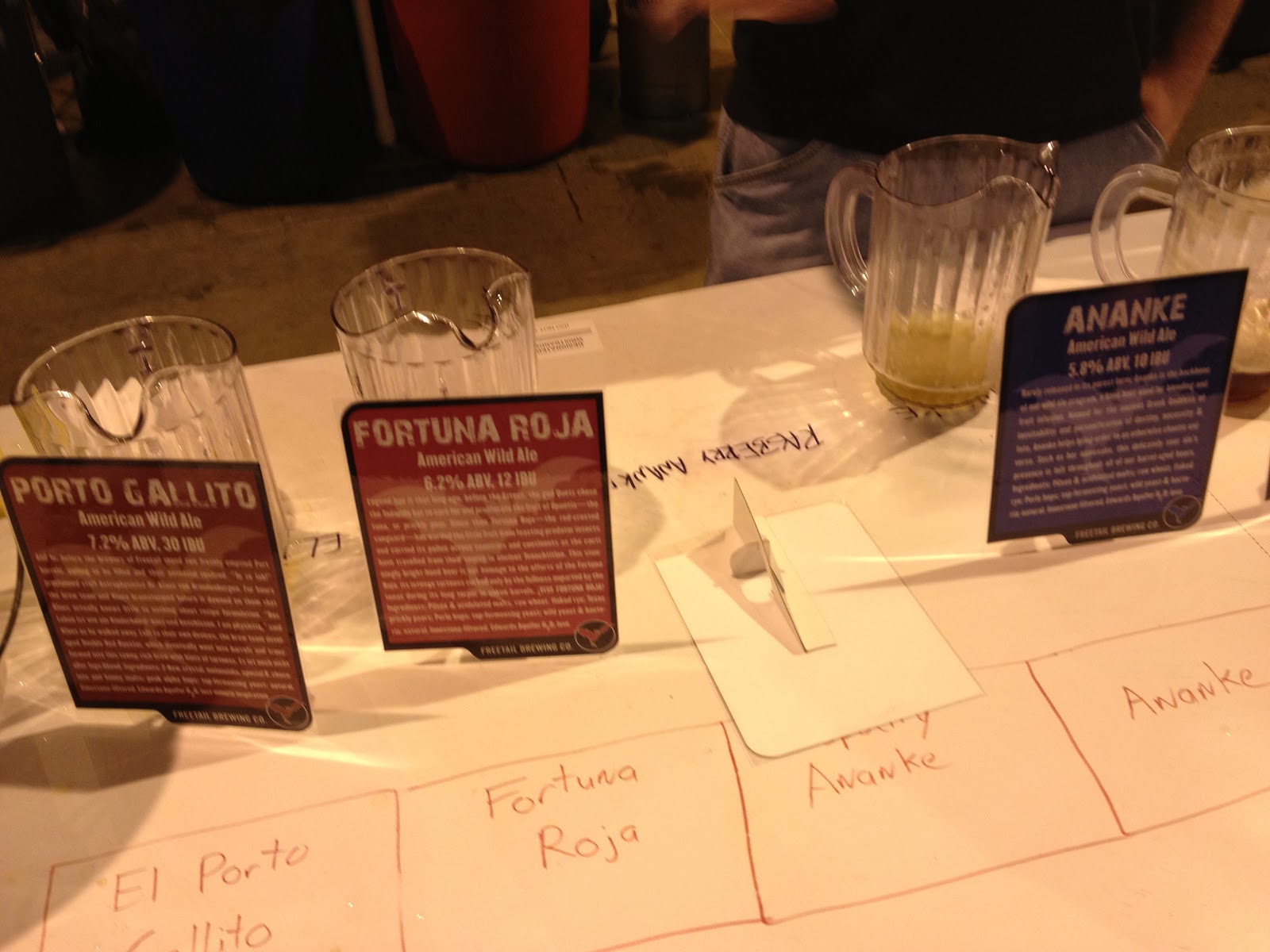
 Marble Brewing and Freetail Brewing

 Commons Brewing

 Cambridge Brewing and Trinity Brewing

 Jester King Brewing

 Funkwerks
 Jolly Pumpkin Brewing

 Catawaba Valley Brewing

 Elevation Brewing

Rivertown Brewing

 Avery Brewing

 Epic Brewing


I had an absolute great time. I am now determined to return, probably every couple years. And hopefully even for a Pro-Am at some point.

Tuesday, May 8, 2012

NHC 2011 First Round Results

This was my first time entering beers in the NHC (and stewarding). This year's competition is a hot button for a lot of brewers because of how quickly the judging centers filled up. In San Diego, all 750 entries were taken in around 2 days. This is even after they added 2 more judging centers and raised the entry fee from $6 to $10 (BOOM, 67% inflation in 1 year).
 I entered 4 beers into this year's NHC. Nothing advanced, but I think it is important for blogs to have full disclosure to their readers. Some of my beers scored badly so see my lessons learned below and help improve your chances in competition.
2010 Flanders Red - NHC Score Sheets added to Tasting Notes
Summary - 29 - Malt bill is 1 dimensional, more malt complexity, subtle and restrained - I got the impression they just thought it was OK. It has all the right flavors (at least from their notes), but didn't stick out in their mind. I think my lack of sourness hurt this beer in competition because 1) the sourness helps brighten the other flavors and 2) the others beers in the flight had much higher sourness making mine seem flat. The beer was made with 7 grains in the grist.

Traditional French Saison - NHC Score Sheets added to Tasting Notes
Summary - 41 (mini BOS) - Lemon and citrus (from Wyeast 3711 yeast), light tartness (acid malt addition), light funk (Brett C added at bottling) - needs better head retention (add more grain with higher protein levels)

Belgian Pale Ale - Achouffe Version - NHC Score Sheets added to Tasting Notes
Summary - 22 - Over the top phenols into the plastic flavors, no malt, no hops, too dry - the beer changed considerably from when I tasted this back in November. The hops are gone and the yeast phenols now dominate everything. And definitely plastic and harsh on the tongue - see lessons learned below.

Oak Aged Scottish 80/-
My Oatmeal Scottish 80/- that has been aged on .25 oz of French Oak cubes.
Summary - 27 - Easy drinking, low malt flavors, acidity, maybe wild yeast - I have never seen such a difference in judges' opinion. I tasted the beer after receiving the score sheets and the oak flavor is very dominant in the aroma and the taste has nicely balanced malt flavors. I think my problem is that most of the beers in this category are high alcohol barleywines or imperial stouts. And once the beer warms up there is some sourness that must have come from some infection during the 6 months in the bottle since I tasted it last.


By attending the judging as a steward and reviewing my score sheets I learned a lot from this year's competition:
  • Try your beer right before you plan to enter it. 2 of my 4 beers changed considerably since I've tried them. They were both from small 1 gal batches, so I didn't want to drink one and risk not having enough bottles for the 2nd round (or my enjoyment). For next year's competition I will taste my beers right before entering them (or registering).
  • Enter beers into a competition before NHC to see if it is worthy of that caliber. For me, Americas Finest Homebrew Competition the month before will be my contest. So for my new plan, I will need to make sure to save (by marking the caps "AFC", "NHC"):
    • AFC: 2 beers + 2 for before and after 
    • NHC 4 beers + 2 for before and after
  • Think about how your beer will match up to other beers that will be judged in the same category. For example, my 4% scottish ale didn't have much of a chance in wood aged beers when the majority of the beers are high alcohol malt bombs.
  • If you are only going to enter a few beers each year (which I am) then concentrate on only a few styles. If you only brew the style once a year it will make it hard or a long time to perfect that style. I am going to start focusing my efforts in Categories 16, 17 and 19. Plus more styles that don't have a category (yet) like 100% Brett beers.

Tuesday, March 6, 2012

Homebrew Tasting - 2010 Flanders Red

Just recently I was reminded that I did not do a formal tasting on my 2010 Flanders Red.  And the beer is over 22 months old (Brewed 4/25/10). I was recently trading some hop rhizomes with a local homebrewer and he knows that I have brewed sours. He wanted to taste a few and learn more about my process. I also thought it was a good opportunity to open a few that I have been meaning to taste again. I brought the Flanders Red because I know it is a crowd favorite and I wanted him to like at least one beer I brought over.

I also took this opportunity to make some formal tasting notes. It was a good chance to taste this beer before I enter it into NHC (which I finally entered beers into, San Diego sold out in 1 day). Well, I think the beer is ready for competition and I'm excited to receive the judge's feedback. As of now, I have only had good reviews from people that are just starting their journey into sour beers.

2010 Flanders Red - My Tasting Notes


So I am pretty darn happy with the beer. As you can see in the 2011 Flanders Red post, I made a few changes to my recipe.

NHC 2012 Results


Wednesday, January 18, 2012

Homebrew Tasting: Best Bitter West Yorkshire Vs. Fullers

This was one of my first 10 gal batches where I split it into 2 - 5 gal batches and it won't be the last because there is a lot to learn from doing this.

Brew Session detailed here

The differences are quite amazing and I greatly preferred the Fuller's batch over the West Yorkshire yeast (at least for this malt bill). See below for my tasting notes on each.

Fuller's (WLP002)


West Yorkshire (WY1469)


I think the main difference is that the Fuller's yeast kept more residual sweetness. That alone helped to make the malt flavors stand out more. I still need to work on the hop flavor and aroma for these beers, because these were both malt forward beers. I think my big process change for them next year will be to use whole flower hops for my flavor and aroma additions. And I'll keep the Fuller's yeast and compare another English strain in next year's split batch.

Wednesday, November 9, 2011

Homebrew Tasting: Belgian Pale Ale - 3 ways

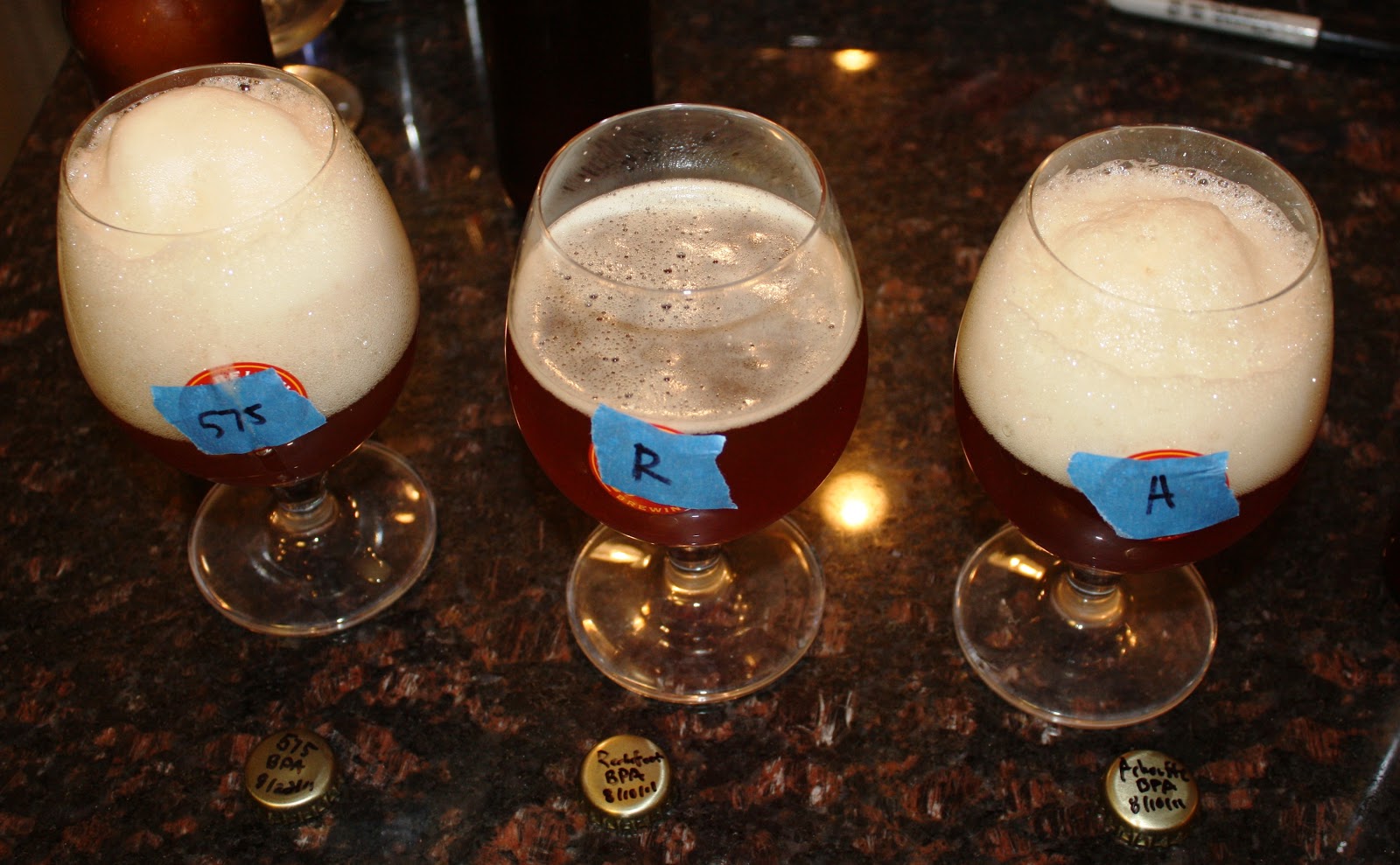
I have finally gotten around to tasting all three versions of the Belgian Pale Ale. This is a tale of success and failure. To remind you the three versions used all the same wort with a different yeast in each:


I think the recipe for the wort worked pretty well. The color was dead on with a neat burnt orange tone. The malt backbone was solid, but really allowed the different yeast flavors to shine. I am becoming a bigger believer in how the Belgians brew with a very simple grist with the only complexity coming from yeast and the occasional candi sugar. And this may be the direction I try next year. I also think that I may need to change how I treat the yeast. From reading through Brew Like a Monk the Belgian brewers are very particular about the pitching amount. They typically underpitch compared to American brewers, but they can get away with this for a few reasons:
  • They want more flavor development than most clean american beers and most of the flavor components are created during the yeast growth phase.
  • They pitch very healthy yeast, coming from an active fermentation.
  • They ferment at higher temperatures that promote cell growth and healthier cells.
575 Version - I must have been in a hurry when kegging this one because it picked up a Brett infection and a Brett strain that is currently in a strange phase. It seems I need these constant reminders to completely dissemble, clean and replace o-rings if going from a Brett to clean beer. And this beer got funky fast since it was sitting at room temperature in the brewing closet for a month.

Rochefort Version - Actually somewhat clean for Belgian standards. The beer is very drinkable, but not all that interesting or complex. Warming the beer up did help bring out more flavor. If I was to use this yeast again I would make sure that the malt and hop bill were very interesting. So I think it would do great in a Belgian Dark Strong or even a Belgian IPA.

Achouffe Version - The crowd favorite and without a doubt, felt "Belgian" to everyone. You could smell this beer from a couple feet away and the taste was equally intense.The famous Belgian phenols were strong, but not overpowering into the smokey or plastic level. The beer finished nicely dry and had a great malt backbone.

This was a neat experiment and great way for me to try several Belgian yeast strains at once. One thing that confused me about these beers was that they used the same wort and were carbonated to the same amount, but the head retention was radically different. I never thought yeast could have this much effect but it must.

2012 NHC Results for Achouffe Version
(Changed considerably after my initial taste, should have tasted a bottle before submitting)


Related Posts Plugin for WordPress, Blogger...