Showing posts with label Trappist. Show all posts

Tuesday, November 22, 2011

Belgian Series: Belgian Dark Strong Ale

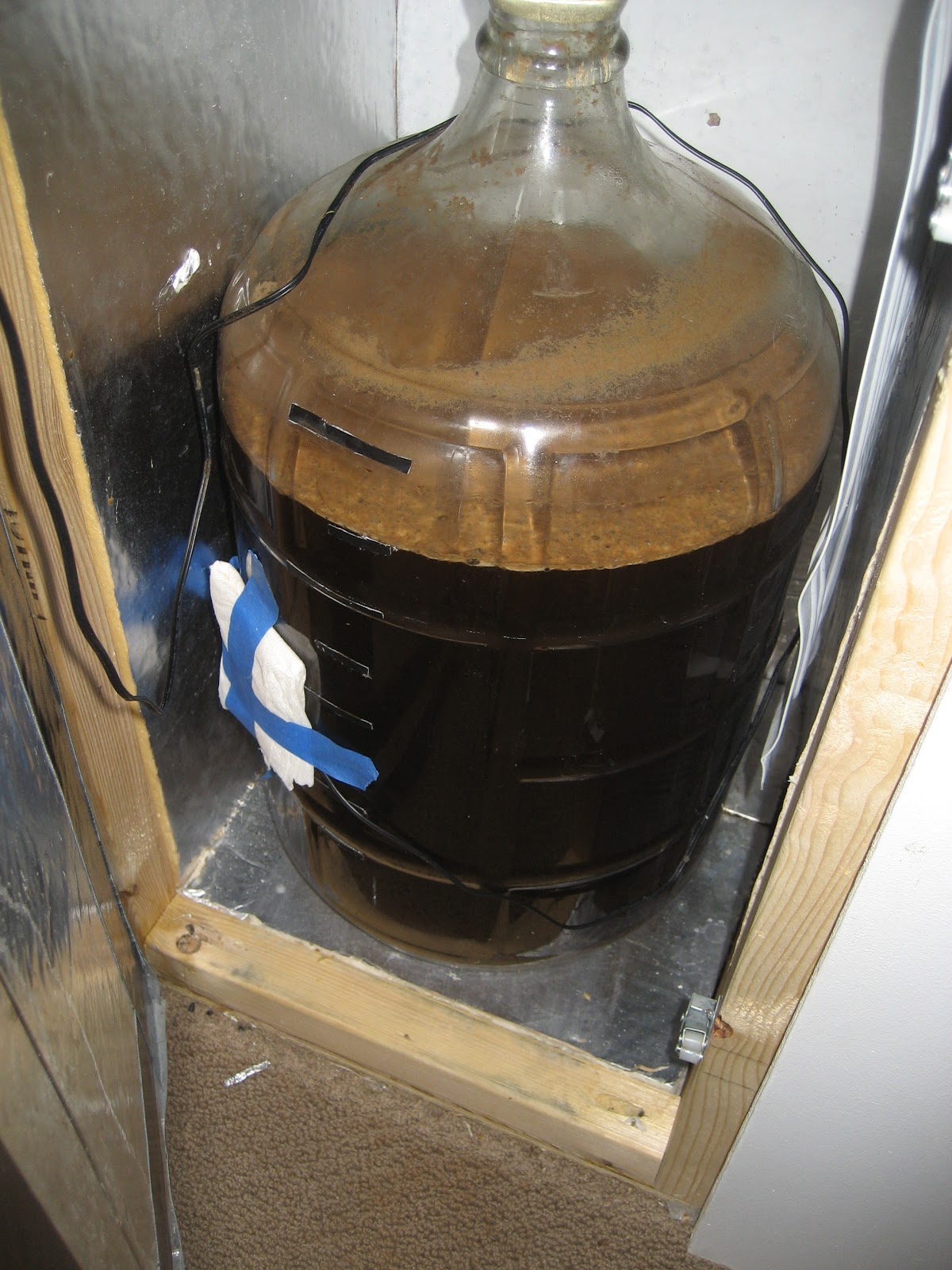
I decided to brew a Belgian Dark Strong as my third and final beer in my Belgian Series for this year. I always lean toward dark malty beers and I love the style, but I wasn't sure how well I could brew it. I haven't brewed very many high gravity beers. Last year, I brewed a 10% Golden Strong and initially I thought it was a pretty big failure. Then I let it sit for 6 months and it turned out to be one of my best beers and highest scoring beers I have ever made. Knowing this, I decided to go big this year and then just be patient.

After looking at a lot of recipes I realized how similar the grain bills are to Belgian Dubbels. But the extra amount of malt and alcohol really change the flavor profile. Brew Like a Monk has a great recipe section on Belgian Dark Strong Ales. And here is another great presentation from Gordon Strong on Designing Belgian Dark Strong Ales. The recipe is almost identical to my Belgian Dubbel just about 25 gravity points higher and no Dark candi syrup.


This was an interesting brew-day also. The day started around 5 in the morning, before the sun had even come up (I was trying to finish brewing before my wife got back from a bachelorette party). It was actually my longest brew session and not because of my stupid mis-haps with the copper manifold like last time. But I just had a hard time with my efficiency so I ended up boiling for 2.5 hours and with 5.5 gal instead of 6.5. The long boiling actually probably helped the flavor of this beer.

For yeast, I really liked how the Rochefort and Achouffe cultured yeast samples turned out in my Belgian Pale Experiment. I wanted the beer to be balanced, but still have some nice phenols from the Achouffe yeast. I had plenty of yeast from the 1 gal batches, so it was all pitched into a small starter the same day and I had activity in 12 hours in the main batch. And look at that 96% Apparent Attenuation.


Recipe: Belgian Dark Strong
O.G.-1.089  F.G.-1.004   IBU-32
SRM-17.4   ABV-11.4%   Batch-5.5 Gal

Grain Bill:
8.5 lb Belgian Pale Malt (52%)
2 lb  Munich Malt 10L (12%)
1 lb Aromatic Malt (6%)
1 lb Flaked Wheat (6%)
1 lb Flaked Barley (6%)
8 oz Caramunich (3%)
8 oz Caravienne (3%) 
8 oz Special B (3%) 
1.5 lb Table Sugar (9%)

Hops:
.7oz Magnum , 13.5%, pellet, 90 min 36.7 IBU
  
Yeast:
150 ml of cultured Rochefort dregs and 150 ml of cultured Achouffe dregs

Brew Day:
Brewed: 8/26/11


Water:


Mash Details:
H2O/Grain Ratio: 1 qt/lb
Mash Volume: 3.5 gal
Sacc Rest. Temp/Time: 150F @ 60min
Strike Temp: 167F
Batch Sparge Volume: 5.5 gal
Sparge Temp/Time: 170F @ 30min

Boil Details:
Boil Volume: 7.5 gal
Boil Time: 150min
Post Boil Volume: 5.5 gal

Ferment Details:
O.G.: 1.088
Ferment Temp: Pitched at 64 and allowed to free rise 2 degrees/day up into the mid 70s
F.G.: 1.004


I also did 2 - 1 gal batches with dregs from Maredsous Brune and St. Bernardus Prior 8. There will only be a follow-up post for the Maredsous version since the St. Bernardus version was murdered. I knocked it off the shelf after 3 days of fermenting. Talk about the worst time to spill my first batch. The highest gravity with still plenty of sugar left in it and it was a dark colored beer on light carpet. After about 3 weeks of cleaning it is barely back to normal.

Tuesday, October 18, 2011

Dreg Series: Ommegang Belgian Dubbel

I am in general a fan of Ommegang. You know when you have one of their beers that it will be a solid, tasty beer. Not necessary the most interesting and complex flavor, but a great drinking beer. After the Achel dregs went bad, I needed a back-up so a quick run to the local good beer store, Best Damn Beer Shop, and I had a bottle of Ommegang Dubbel.

There is some mystery as to if the White Labs 410 is the Ommegang strain or if it is only a proprietary yeast strain not available to homebrewers. I will try to find out by comparing my results with the reviews of WLP410 and see if I agree. It appears like it is on the phenolic and spicy side of the Belgian flavor spectrum and some report a small amount of tartness produced.

This batch got the same treatment as the other dregs beers. I used 6 oz of a 1.030 starter wort + nutrients boiled and cooled. And added directly to the 750 ml bottle. Do this 3 days before and shake as often as possible. It was pitched at 65F and allowed to free rise up into the high 70s. I had activity in 12 hours and this beer seemed to ferment out in less than a week. Then it was bottled after 3 weeks.

12 hours


Day 1


Day 2


The three-way taste test will be posted shortly with the 575 Dubbel and Westmalle Dubbel.

Friday, October 14, 2011

Dreg Series: Westmalle Belgian Dubbel

This is not going to be a long post (because the background has been explained in a previous post), but more of a post so that I can keep updating with the beer's progress. My initial plan for the 2 - 1 gal batches using dregs from Belgian beers was to try Westmalle and Achel. The reason for this is because they use the same yeast according to Brew Like a Monk. So it would have been neat to see if how closely they turned out. Unfortunately, after building up the yeast in the bottle of Achel it may have had an infection. The Westmalle yeast had no problems.


According to the Mr Malty Yest comparison charts, White Labs 530 and Wyeast 3787 are both the Westmalle strain. So you can read those descriptions to get an idea if it is worth it for you to try using the dregs. Personnally, I really like Westmalle Dubbel. It is somewhat clean for a Belgian yeast with just a little bit of fruit to it. Which I think fits perfectly for a Dubbel and a Grand Cru.

I used my standard procedure for building dregs: 6 oz of 1.030 starter wort + nutrients boiled and cooled. And added directly to the 750 ml bottle. Do this 3 days before and shake as often as possible. I had activity in 12 hours and this beer seemed to ferment out in less than a week. Then it was bottled after 3 weeks.

12 hours


24 hours


Day 3


Tuesday, October 11, 2011

Belgian Series: Belgian Dubbel 2011

I am a huge fan of Belgian Dubbels, so I am still on my quest to perfect this style. Last year's Dubbel turned out pretty well, but I had a few improvements I wanted to make.

1. Add oxygen - I still have not made this upgrade, but this batch was aerated by shaking for several minutes and again after 6 & 12 hours.

2. Use D2 syrup instead of homemade syrup - I followed my advice and spent the $6/lb for the real D2 syrup. After one taste of this stuff you can tell there is a difference. It was much more complex and had more of a chocolate than my attempt at making syrup last year. And saved a lot of effort. Here is a good post on trying to make dark candi sugar at home, if you still want to try.

3. New yeast or different fermentation temperature - I discussed about my yeast choices in the Belgian Pale Ale post. I used the washed and measured WLP 575 yeast to brew this batch. I really think the more restrained fruity esters will help bring out the great malt backbone that I like. I also pitched at 64 and allowed the beer to free rise into the mid 70s.

Above were the improvements I noted from last year. I also added a few more once reading Brew Like a Monk and also tasting more examples of the style.

1. Increased the Munich Malt to enrich the Malt Backbone
2. Increased the Aromatic Malt to make the beer a bit more bold
3. Added Flaked Wheat to help with head retention (rocky head on Belgian Beers is very important to me)
4. Used a higher alpha hop to reduce chance of astringency. Plus I lowered the IBUs to help the malt sweetness increase (recommended by Tomme Arthur in the Brew like a Monk book)
5. Used a soft water profile to help reduce astringency and accentuate the malt.
6. Mashed higher at 151 to increase body and malt sweetness.


On to the fun part about Brew Day. I now have my brew system down pretty well. I still always make adjustments if needed for mash temperature or boiling time depending on my extract. But this time it was on another level. I had friends help me brew my last batch and of course I had them do the crappy job of emptying the mash tun. Well, they emptied everything including my copper manifold. It was my fault for not warning them or checking for the manifold after cleaning. I did not realize this until I was just about to mash in for this current batch. So what do I do now?

I have all my ingredients. I have a good block of time. In addition this was my first time trying to brew after work on a weekday. So the homebrew stores are closed plus to make a new manifold would take some time. That's when I remembered I had a paintstraining bag, so I tried a modified brew in a bag method. It worked out, but was difficult because I was already maxing my Mash Tun with 15lbs of grain. My efficiency was a bit low, so I added a bit of table sugar to get my O.G. up higher.


Recipe: Belgian Dubbel 2011
O.G.-1.062  F.G.-1.001   IBU-16
SRM-21   ABV-8%   Batch-7 Gal

Grain Bill:
10 lb Belgian Pale Malt (61%)
2 lb  Munich Malt 10L (12%)
1 lb Aromatic Malt (6%)
1 lb Flaked Wheat (6%)
8 oz Caramunich I (3%) 
8 oz Special B (3%) 
1lb D2 Candi Syrup (6%)  
8oz Table Sugar (3%)

Hops:
.35oz Magnum , 13.5%, pellet, 90 min 15.5 IBU
  
Yeast:
150-200 mL White Labs WLP575 (From Belgian Pale Ale)

Brew Day:
Brewed: 8/9/11

Water:
see Chart

Mash Details:
H2O/Grain Ratio: 1.3 qt/lb
Mash Volume: 3.67 gal
Sacc Rest. Temp/Time: 151F @ 60min
Strike Temp: 162F
Batch Sparge Volume: 5.5 gal
Sparge Temp/Time: 170F @ 30min

Boil Details:
Boil Volume: 7 gal
Boil Time: 90min
Post Boil Volume: 5.5 gal

Ferment Details:
O.G.: 1.062
Ferment Temp: Pitched at 64 and allowed to free rise 2 degrees/day up into the mid 70s
F.G.: 1.001


This was another 7 gal batch so I can have a 5 gal batch with WLP575 and 2 - 1 gal experiments with dregs from Westmalle Dubbel and Ommegang Dubbel. Those posts will come shortly.

Friday, September 30, 2011

Dreg Series: Achouffe Belgian Pale Ale

Here is the 3rd batch all from the same Belgian Pale wort mentioned in the first post. This batch followed the same procedures as the Rochefort dregs. The only difference was that the dregs came from a 750 ml bottle. For obvious reasons like more yeast and a bottle big enough for a good starter I would suggest using these if trying to pitch bottle dregs.


It will be interesting to taste the difference in this yeast versus the others because as far as Belgian yeast goes this is on the other end of the flavor spectrum. I tend to favor the fruitier flavors that you get in Chimay and some in Rochefort beers. But the Achouffe yeast is much more focused on the traditional Belgian phenols (pepper, spice). By testing this yeast with bottle dregs I'll be able to know if I may want to try WLP550 yeast in the future.


The starter was made 3 days ahead of time right in the 750 ml bottle. There was some activity in a couple days. Just like the Rochefort dregs as soon as it was pitched into the gallon of wort it had strong activity in 24 hours. Also pitched at 64 and allowed to free rise.


This has been bottled and a three way taste will be conducted shortly.

Wednesday, September 28, 2011

Dreg Series: Rochefort Belgian Pale Ale

I have started to use dregs from non-sour beers recently because my stock pile of sours is starting to outweigh my supply of everyday drinkers. Believe it or not I don't want a sour beer everytime I have a beer. Plus being a homebrewer with thirtsy (but not always adventurous) friends means I need to have some beer that can please the masses.


The easiest beers to do this with are Belgian beers since almost all of them are bottle conditioned. And usually with the primary strain. My original goal was to brew enough batches to try all the Trappist breweries. And then eventually use each strain to brew a separate 1 gal batch with all the same wort. And then brew a batch were I blend all the strains or just blend my favorites. Stay tuned to see how this all works out.


I planned to brew the main batch with the White Labs 540 Abbey IV (Rochefort) yeast. And then also have a gallon of the same wort fermented with dregs from a bottle so I could compare. But since the Limited Edition WLP540 was not out yet, this did not work.

I made a 6 oz starter with frozen 1.030 wort from a previous batch. This was boiled for 10-15 minutes with 1/8 tsp Wyeast Nutrient.  I then poured the wort right into a small bottle after flaming the lip (the actual beer bottle can be used if large enough (i.e. 750 ml)). I will usually start this about 5-6 days before brew day. This is for a couple reasons:
1. If the dregs end up being bad (dead, contaminated) then there is time to change the plan. Smell and taste your starters!
2. I like to try to build the yeast up again with another 6 oz of starter to make sure they are going strong when pitched into the 1 gal container.

The Rochefort dregs showed some activity after about a day. The starters were shaken as often as possible. Then the whole starter was poured into the Belgian Pale Ale wort and there was strong activity in 24 hours. As I have read in Brew Like a Monk most brewers recommended starting the yeast in 64 degree wort and then letting it free rise. No temperature control was used for the 1 gal batches. They fermented out in about 3-4 days. The temperature rose to 70 in the first 24 hours and finished in the higher 70s.

I will do a tasting with all 3 batches from the same Belgian Pale Ale wort.

Update 11.09.11 - Tasting Notes

Tuesday, August 17, 2010

Session Beer Series: Belgian Single, Patersbier, Enkel

Call it what you want to call it.
Here is another session beer. I am truly excited about this one. It seems like such a great style that appears to be completely over looked. It is not really made commercially. A few of the Trappists make this style but either don't distribute or distribute very locally. (Chimay Doree, Orval Petit, Witcap Paters, Westmalle Extra). Through my internet research there seems to be a bit of confusion as to what to label these beers and also what the difference is between each. So that's why the name has three titles just so I have my bases covered. Actually some also call it a Table beer.
The history I could find behind this beer is debatable like everything in history. One idea is that these beers were the second runnings from the Triples or even Dubbels that the breweries made for the public. They would ferment these beers the same but would just be for the Monks to drink. The low alcohol allowed them to drink while still working (I wish this would still fly).
I made mine a pale version but my research showed that they can vary greatly in grain bill. The other purpose for this batch is to propagate yeast for my whole line-up of Trappist beers. Also if interested in entering this is competition, you may get away with entering it as a Belgium Pale but it seems most enter into the Belgian Specialty Category.
This one was a fun one to research and I came up with the recipe with this thinking. Belgian Pilsner  for the base malt, no explanation needed. The Wheat Malt is mainly to add a bit of protein to help get that rocky Belgian head on the beer that I really like. The CaraMunich is used to add a bit of complexity and toastiness I also like in Pale beers. Then the Acidulated Malt is added for a few reasons, one is to lower my mash pH since this is such a pale beer, but it should also help the beer have a nice crisp finish. The more I read the more it seems like the bittering hop matters very little, for this batch I used Northern Brewer because it was left from my California Common. Then for the flavor/aroma hop I used Saaz as it should give me some nice spice to match up well with the Belgian yeast. Also this is my first Belgian style beer so I decided to start with WLP500 or the Chimay yeast. I like the idea of using this for the entire Trappist series. And my plan next year is to brew the same grain bill with another yeast like WLP550. It will be fun to see the differences and maybe even try a vertical tasting in a few years.

Recipe: Belgian Single / Patersbier / Enkel
O.G.-1.039  F.G.-TBD   IBU-16.6 
SRM-5   ABV-3.8-4.2%%   Cal-127

Grain Bill (75% Efficiency):
5 lb Belgian Pilsner Malt (71.4%)
1 lb Wheat Malt  (14.3%)
.5 lb CaraMunich Malt (7.1%)
.5 lb Acid Malt (7.1%)

Hops:
.25 oz Northern Brewer, 8.8%, pellet, 80 min 12.1 IBU
.5 oz Saaz, 6.4%, pellet, 15 min 4.5 IBU

Yeast:
White Labs WLP500 Trappist Ale (Chimay)

Brew Day:
Brewed: 8/14/10
Kegged: TBD

Water:
San Diego (Alvarado) Tap Water
1 campden tablet per 5 gal.

Mash Details:
H2O/Grain Ratio: 1.4 qt/lb
Mash Volume: 2.5 gal
Sacc Rest. Temp/Time: 152F @ 60min
Strike Temp: 164F
Batch Sparge Volume: 5 gal
Sparge Temp/Time: 170F @ 30min

Boil Details:
Boil Volume: 7 gal
Boil Time: 90min
Post Boil Volume: 5 gal

Ferment Details:
O.G.: 1.043 (I got 78% efficiency)
Ferment Temp: 66-69F
Length: 14 days in primary
F.G.: TBD

Day 2

Related Posts Plugin for WordPress, Blogger...